Health Insurance Advisor in Pune: Why Health Cover Protects Your Savings, Not Just Your Health
Last updated: 12 October 2026
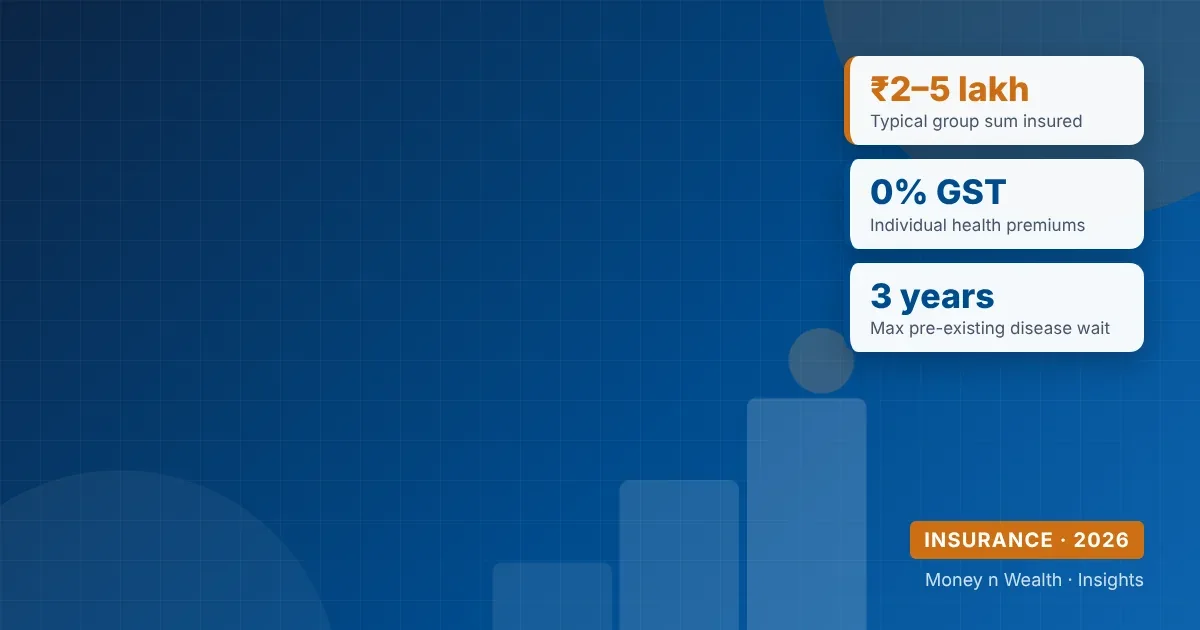
Quick answer: A Pune family typically needs ₹15-25 lakh of health cover on a family floater, a separate policy for senior parents and a super top-up for large claims, since a single cardiac procedure can cost ₹3-6 lakh. Individual health premiums carry no GST since 22 September 2025, and IRDAI caps pre-existing disease waits at 3 years.
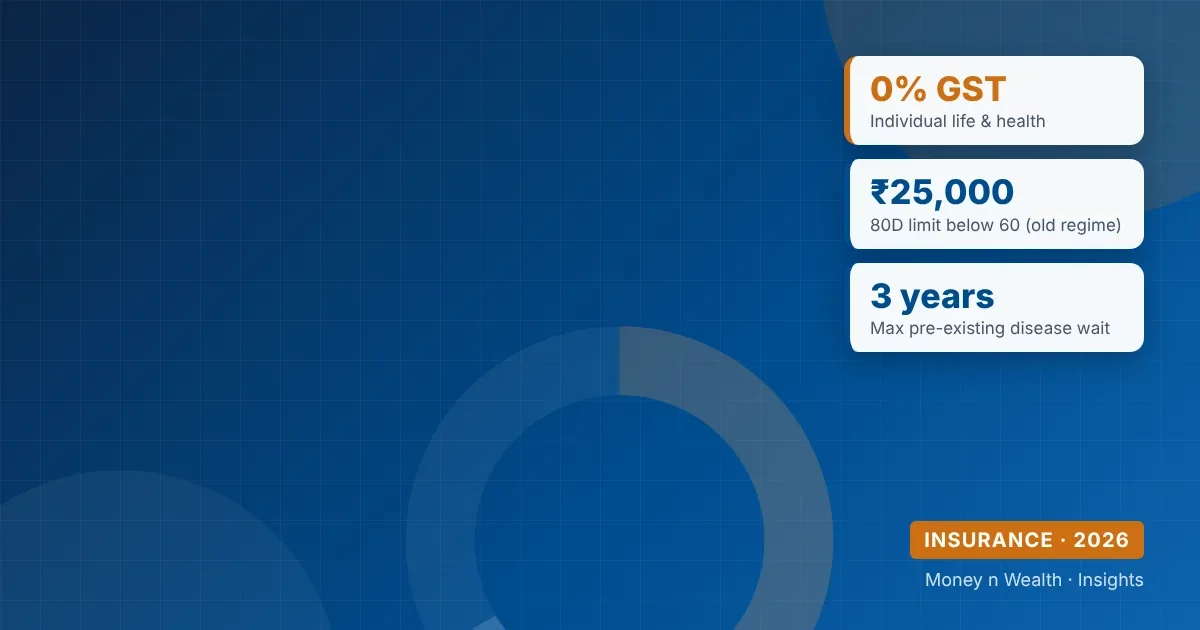
Last updated: 12 October 2026 Quick answer: A Pune family typically needs ₹15-25 lakh of health cover on a family floater, a separate policy for senior parents and a super top-up for large claims, since a single cardiac procedure can cost ₹3-6 lakh. Individual health premiums carry no GST since 22 September 2025, and IRDAI caps pre-existing disease waits at 3 years. Key takeaways Scale of costs (illustrative, Pune 2026): ₹80,000-₹1.8 lakh for a 3-4 day stay, ₹3-6 lakh for angioplasty, ₹25,000-₹60,000 a day in ICU. Cover by household: ₹5-10 lakh single, ₹10-15 lakh couple, ₹15-25 lakh family floater, ₹10-25 lakh separately for senior parents. Compare beyond premium: room-rent caps, sub-limits, co-pay, waiting periods, restoration and network hospitals near you. 2026 rules: no GST on individual and family floater premiums; pre-existing disease wait capped at 3 years, moratorium at 5 years. Tax: up to ₹25,000 for your family and ₹50,000 for senior parents under Section 80D (now Section 126), old regime only. Most financial plans focus on the upside — SIPs, compounding, retirement corpus. Health insurance protects everything else from being wiped out by one bad week. As a health insurance advisor working with individuals and families across Pune, the most common regret we hear isn't "I wish I'd invested more" — it's "I wish we'd had adequate health cover before it happened." The Real Cost of "No Health Insurance" in 2026 Healthcare costs in Pune and other metros have risen well ahead of general inflation, driven by advanced treatment options and costlier hospital infrastructure, diagnostics and implants. Event Typical cost range in a Pune private hospital (2026, illustrative) 3–4 day hospitalisation (dengue, typhoid, infection) ₹80,000 – ₹1,80,000 Cardiac procedure (angioplasty) ₹3,00,000 – ₹6,00,000 Major surgery (e.g., joint replacement) ₹3,50,000 – ₹7,00,000 Cancer treatment (per cycle, can repeat) ₹5,00,000 – ₹20,00,000+ ICU care per day ₹25,000 – ₹60,000 Illustrative ranges to show scale, not quotes — actual costs vary and should be confirmed independently. Compare that to how households actually fund a medical emergency without insurance: liquidating mutual funds and FDs meant for a child's education or retirement, breaking a long-term SIP, or borrowing at high interest. A single hospitalisation can erase two to five years of disciplined saving in days. Health insurance is not a health product — it's a savings-protection product. Why "I'm Young and Healthy" Isn't a Reason to Skip It Premiums are priced on age and health at purchase — buying early locks in lower cost before any condition becomes a pre-existing-disease waiting period. And a health event doesn't wait for financial readiness — accidents and sudden diagnoses affect people in their 20s and 30s too. Why a Corporate/Group Policy Alone Often Isn't Enough Cover typically ends the day you leave the job, sum insured is often a standardised ₹3–5 lakh regardless of your family's needs, parents may be excluded, and there's no portability of no-claim benefits. See our dedicated piece: Health Insurance for Corporate Employees in Pune (/insights/health-insurance-for-corporate-employees-pune) . How Much Health Cover Does a Pune Family Actually Need? How much health insurance cover a Pune family needs: ₹5-10 lakh single, ₹10-15 lakh couple floater, ₹15-25 lakh family floater, ₹10-25 lakh separate policy for senior parents, plus super top-up Indicative minimum health cover by household Household profile Suggested minimum cover Notes Single young professional ₹5–10 lakh Add a super top-up as income grows Couple, no dependents ₹10–15 lakh (floater) Individual cover if one partner has a health history Family with young children ₹15–25 lakh (floater) Maternity/newborn cover if planning children Family with senior parents Separate policy, ₹10–25 lakh Parents' premiums are priced higher — plan early Any household Base policy + super top-up Large cover at a fraction of the cost Health Insurance Rules That Changed Recently No GST on individual premiums. From 22 September 2025, individual, family floater and senior-citizen health policies are exempt from GST, which was 18% earlier. Group policies are not part of this exemption. Shorter waiting periods. IRDAI's 2024 health insurance master circular caps the waiting period for pre-existing diseases at 3 years, and after 5 years of continuous cover (the moratorium) a claim cannot be contested for non-disclosure except for proven fraud. No upper entry age. Insurers can no longer refuse a new health policy on age alone, though premiums, co-pay and underwriting for seniors still vary widely. Tax deduction in the old regime only. Up to ₹25,000 a year for self, spouse and children (₹50,000 if you are 60+) and up to ₹50,000 for senior-citizen parents, under Section 80D, now Section 126 of the Income-tax Act, 2025. What to Actually Compare Before Buying (Not Just Premium) Claim settlement ratio and claim experience, not just premium. Room rent limits and sub-limits — a low room-rent cap can cut payout via proportionate deduction even with high sum insured. Waiting periods for pre-existing diseases and maternity. Network hospitals near where you live/work in Pune. Restoration/refill benefit. Co-payment clauses (common in senior policies). No-claim bonus structure and whether it survives a claim. Why Work With an Advisor Instead of Buying the Cheapest Policy Online The cheapest health policy is often the most expensive mistake — achieved through sub-limits, higher co-pay, or a smaller network only visible at claim time. An advisor compares policies on what matters at claim stage, matches cover to your family's real medical history and city, and helps during the claim itself — where most value shows up, often years later. Related reading on Money n Wealth Why corporate employees in Pune need their own health policy (/insights/health-insurance-for-corporate-employees-pune) Insurance planning in India: term, health and life cover (/insights/insurance-planning-guide-india) Emergency fund guide: the cash buffer beside your insurance (/insights/emergency-fund-guide-india) Insurance through Money n Wealth (/products/insurance) Frequently Asked Questions Is health insurance really necessary if I'm healthy and rarely fall sick? Yes — it exists for the low-probability, high-cost event you can't predict. The point isn't to "use" it every year; it's that the one year you need it doesn't derail your finances. Can one policy cover my whole family? Yes, via a family floater — usually more cost-efficient for young families, though senior parents are often better on a separate policy given their different risk and pricing. Does my employer's health insurance mean I don't need my own policy? No. Group cover is valuable but temporary and often insufficient — it ends when you leave the job and rarely covers your full family adequately. How does health insurance protect my other investments? By paying hospitalisation costs directly, removing the need to redeem funds, break FDs, or take on debt during a medical emergency — keeping long-term investments compounding uninterrupted. How much tax can I save on health insurance premiums in 2026? Only under the old tax regime. You can deduct up to ₹25,000 a year for self, spouse and children (₹50,000 if you are 60 or older) and another ₹25,000 for parents (₹50,000 if a parent is a senior citizen), up to ₹1 lakh in all. This is Section 80D, carried into Section 126 of the Income-tax Act, 2025. The new regime allows no deduction. What is the waiting period for pre-existing diseases in health insurance? Under IRDAI's 2024 health insurance master circular, a pre-existing disease can be excluded for at most 3 years of continuous cover, down from 4 earlier. After 5 continuous years (the moratorium period), the insurer cannot contest a claim for non-disclosure except in proven fraud. Individual policies may set shorter waits, so compare them. Is GST charged on health and life insurance premiums in 2026? No, for individual policies. From 22 September 2025, premiums for individual life insurance (term, endowment, ULIP) and individual or family floater health insurance are exempt from GST, which was 18% earlier. Group policies bought by employers are not covered by this exemption. Renewals falling due after that date are charged without GST. Want a second opinion on your current health cover? Start with our free insurance portfolio checkup (/free-insurance-checkup) or talk to our team (/contact) . Money n Wealth (Predics Fintech Services Pvt Ltd) is an AMFI-registered Mutual Fund Distributor (ARN-121995) and APMI-registered PMS Distributor (APRN07444); it is not a SEBI-registered investment adviser and may earn distribution commission on investments made through it. Insurance is the subject matter of solicitation.