Health Insurance for Corporate Employees in Pune: Why Your Group Cover Isn't Enough
Last updated: 12 October 2026
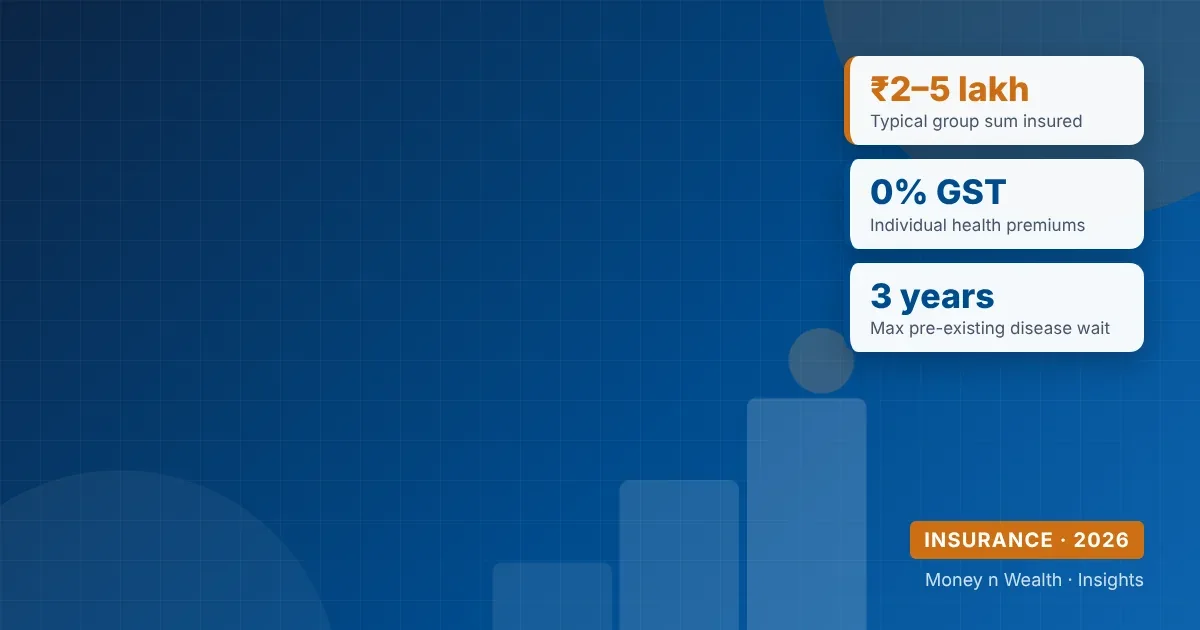
Quick answer: Group health insurance from your employer usually covers ₹2-5 lakh, ends the day you leave the job and often excludes parents. Corporate employees in Pune should also hold a personal family floater, plus a separate policy or top-up for parents. Since 22 September 2025, individual health premiums carry no GST.
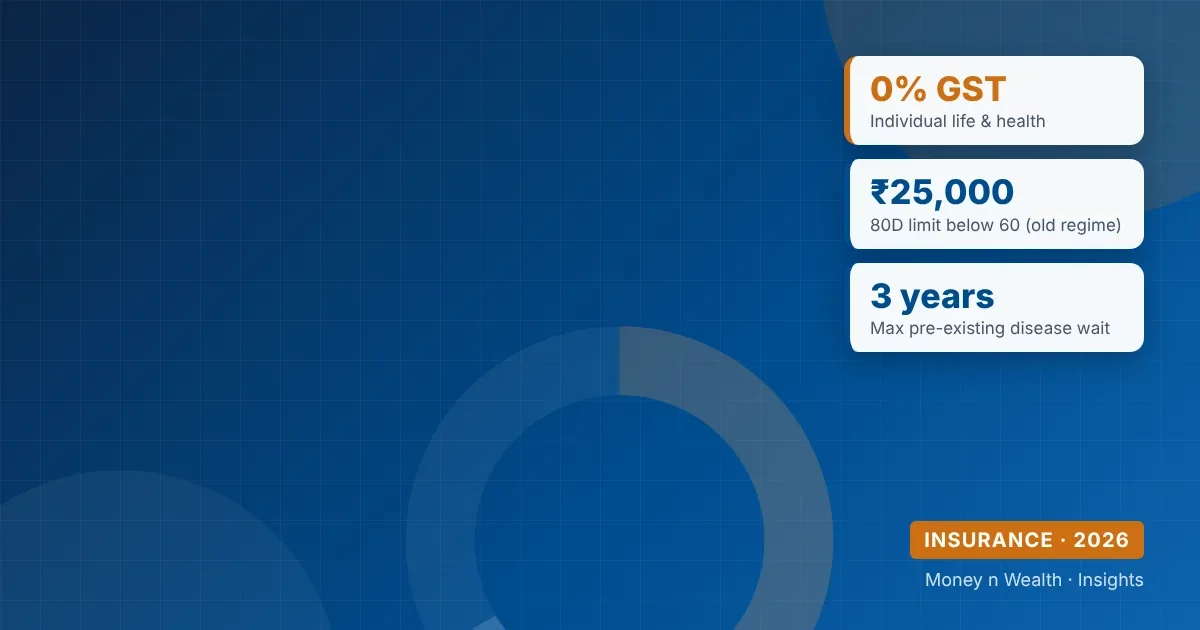
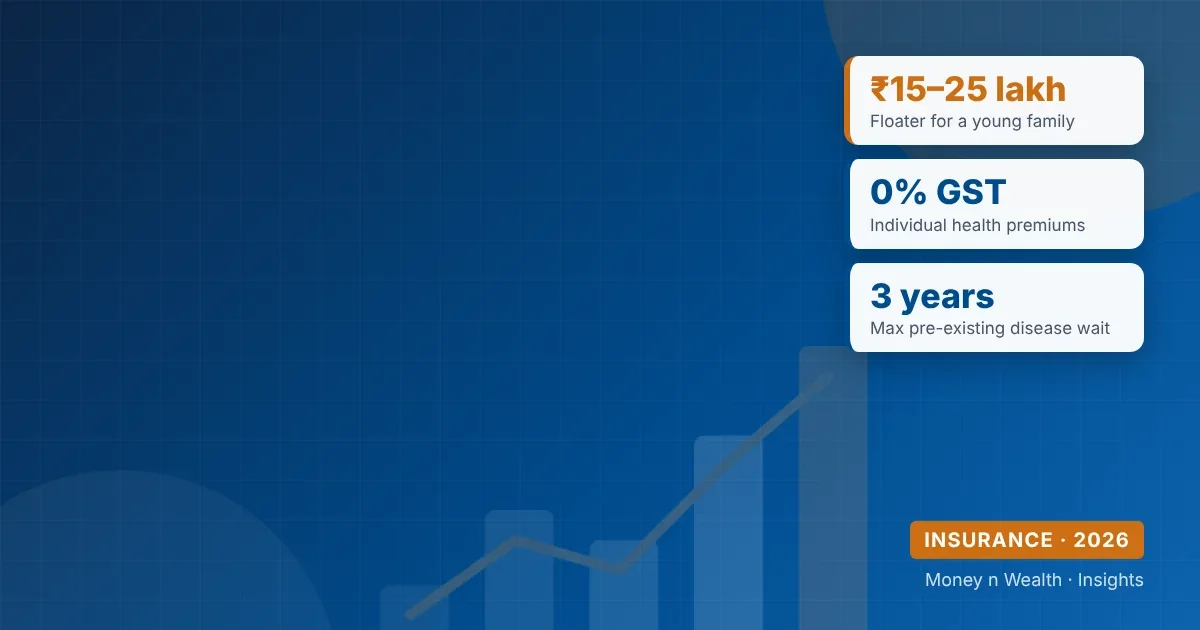
Last updated: 12 October 2026 Quick answer: Group health insurance from your employer usually covers ₹2-5 lakh, ends the day you leave the job and often excludes parents. Corporate employees in Pune should also hold a personal family floater, plus a separate policy or top-up for parents. Since 22 September 2025, individual health premiums carry no GST. Key takeaways Group cover is temporary: it is owned by the employer, ends on resignation or layoff and can be cut at the next renewal. Typical gap: a standard ₹2-5 lakh group sum insured is small against major treatment costs at private hospitals in Pune. Buy early: a personal policy started in your late 20s or 30s builds continuity, so the up-to-3-year pre-existing disease wait is served while you are healthy. Cheaper since 2025: individual and family floater health premiums are GST-exempt from 22 September 2025 (earlier 18%). Tax deduction: up to ₹25,000 for your family and ₹50,000 for senior-citizen parents under Section 80D (now Section 126), old regime only. Pune's IT parks, manufacturing hubs and corporate campuses in Hinjawadi, Kharadi, Baner and Magarpatta employ a huge share of the city's working population, and nearly all offer some group health insurance. It's a genuinely good benefit — and the reason so many employees go years without their own policy, assuming they're already covered. That assumption is where the real risk hides. What Group Health Insurance Actually Covers — And Where It Stops Employer group policies are negotiated for the company as a whole, optimised for cost, not any individual's actual needs. Health insurance for corporate employees in Pune: group cover vs personal policy compared on sum insured, what happens when you leave the job, parents Employer group cover vs a personal health policy Group (corporate) health insurance What it typically means in practice Sum insured Often a standardised ₹2–5 lakh, regardless of your family's real needs or Pune's hospital costs Coverage ends The day you resign, are let go, or retire Portability Little to none — can't carry cover, waiting-period benefits or no-claim history to a new policy Parents' coverage Often excluded, or a limited, separately-priced add-on Customisation Fixed for everyone at your level — no control over sum insured, riders or network Continuity between jobs A gap between employers can leave you completely uninsured Control Owned by your employer — benefits can be reduced at the next renewal without your input The Scenario That Catches People Off Guard It plays out the same way often: a health event happens — a parent needs hospitalisation, or someone is between jobs during a lay-off — right when the group policy doesn't cover that person or has just lapsed with the job change. A fresh individual policy then means starting from zero: a fresh pre-existing-condition waiting period of up to 3 years (IRDAI's current maximum), fresh underwriting, and premiums priced for your current age — all while cover is needed immediately. Why This Matters Even More the Longer You've Relied on "Free" Cover The longer you stay reliant on group cover alone, the older you'll be when you finally buy your own — meaning higher premiums, a greater chance of a condition being flagged pre-existing, and a longer wait before it's covered. Buying a personal policy in your late 20s or early 30s, even a modest one, alongside employer cover, locks in continuity and a no-claim history through job changes, career breaks, or a shift to entrepreneurship. What a Corporate Employee's Complete Health Cover Should Look Like Layer Purpose Employer group policy First line of defence while employed — use it, don't rely on it alone Personal individual/family floater policy Continuity that survives job changes, layoffs or career breaks Cover for parents A dedicated senior-citizen-friendly policy — group cover rarely includes them adequately Super top-up Cost-efficient way to raise total protection, especially in high-cost cities like Pune A Practical Way to Think About the Cost A personal policy bought alongside employer cover is a modest annual premium relative to income for most professionals — its purpose is to be there the one day you need it, independent of your employment status that day. Framed against the potential cost of a single unplanned hospitalisation (see our health insurance guide (/insights/health-insurance-advisor-in-pune) ), it's a small, predictable number protecting against a large, unpredictable one. What a Personal Policy Costs You in Tax and GST (2026) Two rule changes have made a personal policy cheaper to hold alongside group cover: No GST on individual health premiums. From 22 September 2025, premiums for individual and family floater health policies, including senior-citizen plans, are exempt from GST. Earlier they carried 18%. Shorter waits. IRDAI's 2024 health insurance master circular caps the pre-existing disease waiting period at 3 years and the moratorium at 5 years of continuous cover. Old-regime deduction. Premiums you pay for yourself, spouse and children qualify for up to ₹25,000 a year (₹50,000 if you are 60 or older), plus up to ₹25,000 for parents (₹50,000 if a parent is a senior citizen). This is Section 80D, which continues as Section 126 of the Income-tax Act, 2025. There is no deduction in the new regime, and the premium your employer pays for group cover is not yours to claim. Questions to Ask Your HR or Insurance Advisor Today What is the exact sum insured under our group policy, per employee and family member? Are my parents covered, up to what amount, under what conditions? What happens to my cover the day I resign or am terminated — any conversion or portability option? Are there sub-limits on room rent, specific treatments or maternity? Does the group policy offer a personal top-up option, and is that better or worse than an independent policy? Related reading on Money n Wealth Health insurance in Pune: how much cover a family needs (/insights/health-insurance-advisor-in-pune) Insurance planning in India: term, health and life cover (/insights/insurance-planning-guide-india) Term insurance in Pune: sizing your life cover (/insights/term-insurance-advisor-pune) Insurance through Money n Wealth (/products/insurance) Frequently Asked Questions If my company already pays for my health insurance, why should I pay for another policy? Because group cover is tied to your job, sized for the average employee rather than your family, and usually excludes or limits parents — a personal policy protects you continuously, regardless of employment status. Can I have both a corporate policy and a personal policy at the same time? Yes, and many employees do exactly this — you can typically claim from both (subject to insurer rules), and a personal policy means you're never uninsured between jobs or after retirement. Is it too late to buy a personal policy after 10+ years on corporate cover? No, but every year of waiting means underwriting at a higher age, more chance of a condition affecting terms, and a higher premium. The best time to start is now. Does a personal health policy also cover my spouse and children? Yes, through a family floater plan you choose and control yourself, independent of your employer's family definitions. Can I convert my group health cover into a personal policy when I leave my job? Often, yes. IRDAI's rules let members of a group policy move to an individual policy with the same insurer, or port to another insurer, with credit for waiting periods already served, subject to underwriting. Ask HR and the insurer about the option and its deadline before your last working day, because a lapse in cover can reset that credit. Is GST charged on health and life insurance premiums in 2026? No, for individual policies. From 22 September 2025, premiums for individual life insurance (term, endowment, ULIP) and individual or family floater health insurance are exempt from GST, which was 18% earlier. Group policies bought by employers are not covered by this exemption. Renewals falling due after that date are charged without GST. How much tax can I save on health insurance premiums in 2026? Only under the old tax regime. You can deduct up to ₹25,000 a year for self, spouse and children (₹50,000 if you are 60 or older) and another ₹25,000 for parents (₹50,000 if a parent is a senior citizen), up to ₹1 lakh in all. This is Section 80D, carried into Section 126 of the Income-tax Act, 2025. The new regime allows no deduction. Not sure what your group policy actually covers? Talk to our team (/contact) or check our broader guide on health insurance in Pune (/insights/health-insurance-advisor-in-pune) . Money n Wealth (Predics Fintech Services Pvt Ltd) is an AMFI-registered Mutual Fund Distributor (ARN-121995) and APMI-registered PMS Distributor (APRN07444); it is not a SEBI-registered investment adviser and may earn distribution commission on investments made through it. Insurance is the subject matter of solicitation.